
What the stain is telling you
A water stain is a record. A single pale ring means the spot got wet once and dried. Several rings, one inside the other, mean it has been wet again and again, usually storm after storm. A dark center, a soft spot when you press it, or paint that's bubbling means the drywall is wet right now.
Pay attention to where it is, too. A stain near an outside wall often traces back to the roof edge or the gutters. A stain near a chimney or under a wall that rises above the roof points to flashing. A stain in the middle of a room, under a bathroom on the floor above, may have nothing to do with the roof.
Why the stain isn't under the hole
Water that gets under the roofing doesn't drop straight down. It runs along the underside of the decking, follows a rafter, soaks into insulation, and shows up on the ceiling wherever it finally pools. The stain in the bedroom can be several feet from where the water came in, and on a steep roof it can be farther than that.
That's why chasing a leak from inside the house rarely works, and why a patch on the ceiling does nothing. The fix is on the roof, at the point where the water gets in.
Where roof leaks usually start
On most roofs, the field of shingles is the strongest part. The weak points are where the roof meets something else:
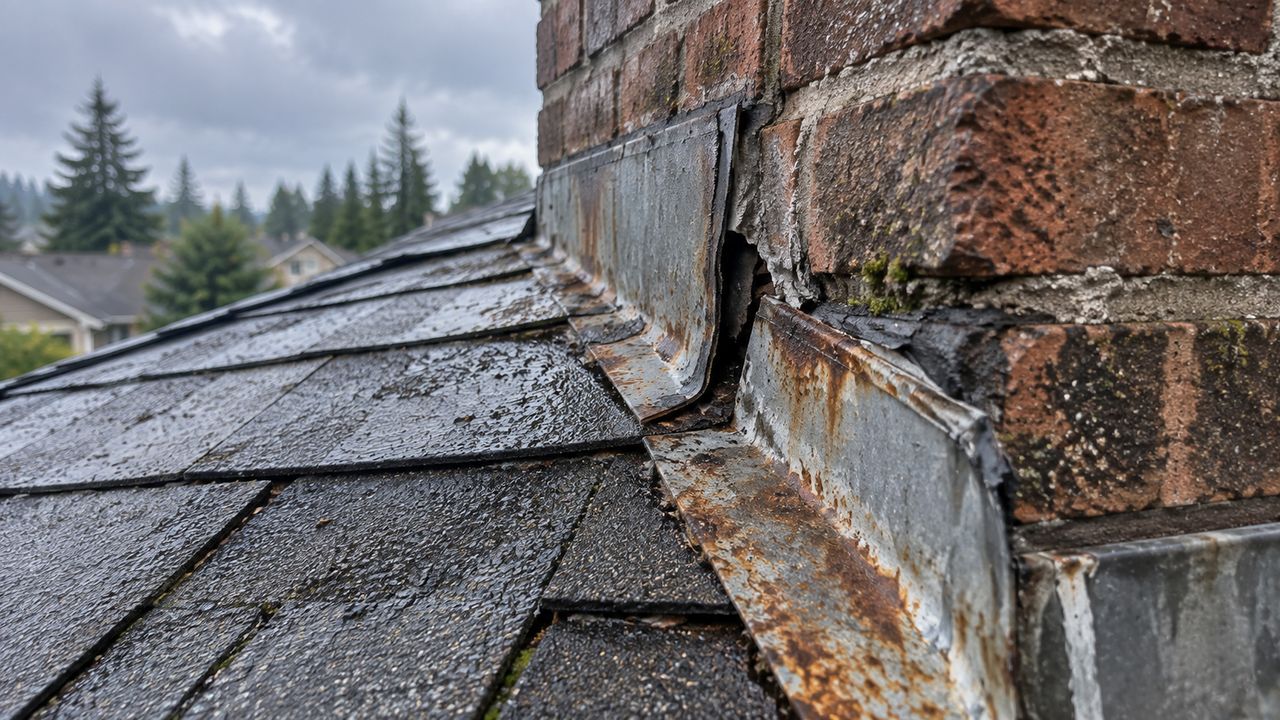
- Flashing at walls and chimneys. The metal that seals those joints rusts, and the sealant around it cracks. Once there's a gap, wind-driven rain finds it.
- Vent pipe boots. The rubber collar around a plumbing vent dries out and splits long before the shingles wear out. It's one of the most common leaks there is, and one of the simplest to fix.
- Valleys. Two roof planes meet and all their water runs through one channel. Fir needles and leaves build up there and hold moisture against the roof.
- Edges and gutters. When gutters are packed, water backs up under the first rows of shingles and into the wood behind the gutter.
- Lifted or missing shingles. Wind takes a few tabs, or moss pries the edges up, and the rows underneath are exposed.
- Skylights. The seal and the flashing around a skylight age like everything else on the roof.
Is it always the roof?
No. Before you assume the roof is failing, rule out the other two common causes:
- Plumbing. If the stain is under a bathroom, a laundry room or a run of pipe, and it doesn't change with the weather, look there first.
- Condensation. A stain that appears in cold weather with no rain can be moisture collecting in the attic, often from a bathroom fan that vents into the attic instead of outside.
Two clues point to the roof: the stain grows or darkens after rain, and the space above it is attic, not a bathroom.
What to do first
- Put a bucket under any drip and move what you can out of the way.
- Take photos of the stain. If it grows, take another one a week later from the same spot.
- Note when it got worse. After a windstorm? After days of steady rain? That helps find the source.
- If you can get into the attic safely, take a flashlight and look above the stain for wet wood or dark trails. Step only on the joists.
- Stay off the roof. A wet roof is dangerous, and moss makes it worse.
- Have a licensed roofer look at it. In Oregon you can check any contractor's license on the state CCB website before they come out.
If water is coming in right now, see what to do in the first hour of a roof leak.
What a roofer looks at
Finding a leak is detective work, and it happens on the roof, not from the yard. A roofer will check the flashing at every wall and chimney, press on the vent boots, clear and inspect the valleys, look for lifted or cracked shingles and exposed nails, and feel for soft decking underfoot. In the attic they'll follow the water trail back toward its source.
Ask for photos of what they find. You should be able to see the problem for yourself before you agree to pay for fixing it.
Why it's worth doing now
A leak doesn't stay the same size. Each storm pushes more water into the same spot, and in a Willamette Valley winter the wood and insulation don't get a chance to dry. A repair that would have been some flashing and sealant turns into replacing decking, insulation and drywall. The sooner it's found, the smaller the repair.
Common questions
Can I just paint over the stain?
You can, once the leak is fixed and the area is dry. Use a stain-blocking primer first or the ring will come back through the paint. Painting before the leak is fixed only hides the evidence.
Will my whole roof need replacing?
Usually not. If the rest of the roof is in good shape, a leak at flashing or a vent is a repair. A replacement comes into it when the shingles are worn out across the whole roof.
Will my homeowners insurance cover it?
It depends on your policy and on what caused the leak. Sudden damage, like shingles torn off in a windstorm, is often treated differently from slow wear. Your insurer makes that call, so ask them, and keep your photos.
How long can I wait?
Not through a wet season. The longer wood and insulation stay wet, the more there is to replace, and wet materials that never dry out can grow mold.
The stain dried up. Is the problem gone?
Probably not. It usually means the weather changed. A leak that depends on wind direction or heavy rain can go quiet for weeks and come back with the next big storm.
Tell us what you're seeing.
Call, text, or send a request. We'll talk it through and set up a time to look at the roof.
Think it's the roof? Here's what a roof repair in Woodburn involves.
Keep reading: Roof leaking in the rain? What to do in the first hour · Repair or replace? Signs your roof is wearing out