
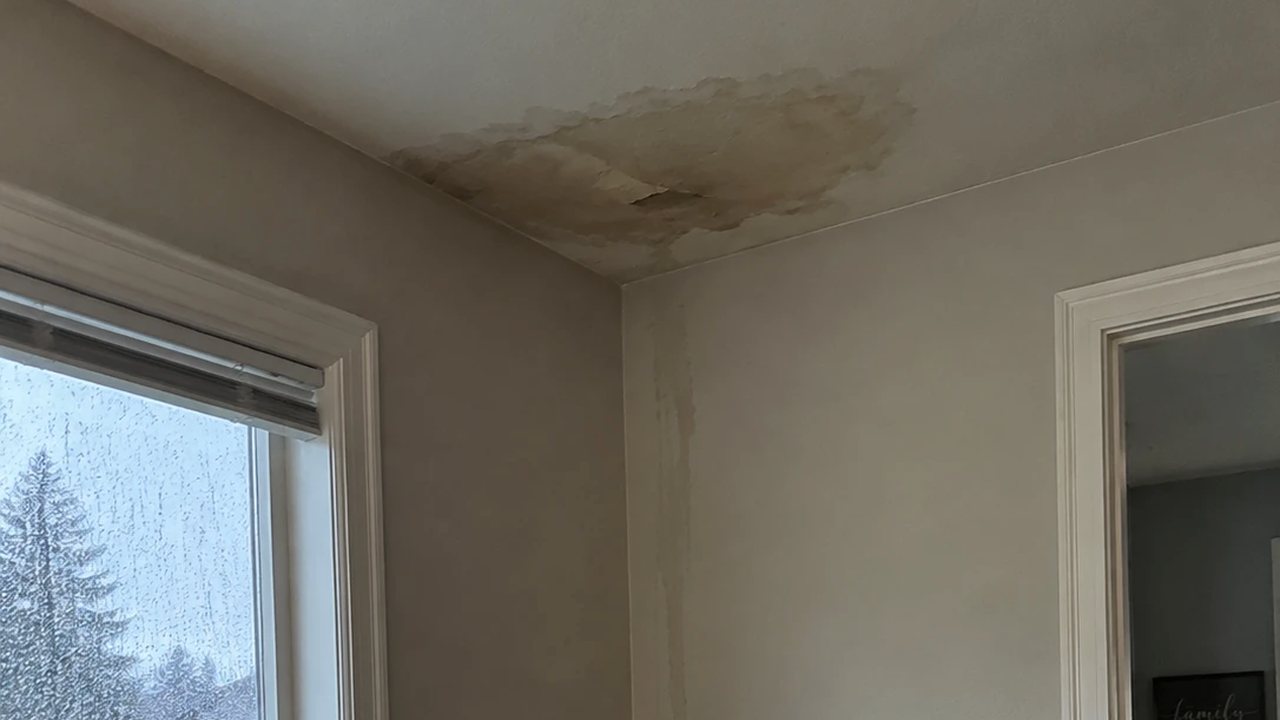
1. Contain the water
Put a bucket or a bin under the drip. Lay a towel in the bottom so the dripping doesn't keep you up all night. Move furniture, rugs and electronics out of the way, and cover what you can't move with plastic sheeting or trash bags.
If water is running down a wall, push a towel against the base of the wall and check it every hour or so.
2. Deal with the two safety problems
Electricity. If water is dripping from or near a light fixture, a ceiling fan or an outlet, switch off the breaker for that room and don't use the fixture until it has been checked. Only do that if you can reach the panel dry. If the panel or the floor under it is wet, don't touch it. Call an electrician or your utility.
A bulging ceiling. If the drywall is sagging or ballooning, it's holding water, and wet drywall can come down without warning. Keep people and pets out from under it.
3. Take photos and notes
Take photos and a short video of the drip, the stain, and anything that got wet. Write down the time it started and what the weather was doing: steady rain, wind from a certain direction, the first storm after a dry spell. A leak that only shows up with wind from the south tells a roofer a lot about where to look.
If you end up talking to your insurance company, they'll want the same photos.
4. Stay off the roof
It's tempting to go up with a tarp. Don't. A wet roof is slippery, a mossy one is worse, and doing it in the dark and the wind is how people get badly hurt. The damage inside the house can be fixed. Let someone with the right safety gear handle the roof.
5. If it's safe, look in the attic
If you have easy attic access, take a flashlight and look above the drip. Skip the attic if water is anywhere near lights or wiring up there. Step only on the joists, never on the drywall between them. If you can see where water is coming in, put a bucket under that spot in the attic too, on a board laid across the joists. Catching it there keeps it out of your insulation and your ceiling.
6. Call a roofer, and what to tell them
You'll get help faster if you can tell them:
- Where in the house the water is showing up, and how much
- When it started and what the weather was doing
- Roughly how old the roof is, if you know
- Whether you've seen missing shingles, a fallen branch, or anything else on the roof
- Whether it has leaked there before
Send the photos. Before anyone comes out, take a minute to check their license on the Oregon CCB website. Storms bring out contractors you've never heard of, and a legitimate one won't mind being looked up.
What happens next
In the rain, the first job is usually temporary: covering or sealing the spot so water stops coming in. Most permanent repairs need a dry roof, so the lasting fix often follows when the weather allows. Ask what was done as the temporary measure, what the permanent repair will be, and get that in writing.
Inside, dry things out as fast as you can. Run fans, and a dehumidifier if you have one. Wet insulation doesn't dry well in place and usually has to come out. Leave the painting until everything is dry and the leak is fixed for good.
Once the emergency is over, it's worth understanding why it happened. Here's where roof leaks usually start.
Common questions
Can a roofer fix a leak while it's still raining?
Usually they can stop the water with a temporary cover or seal. The permanent repair generally needs a dry roof, so it follows when the weather allows.
Should I tarp the roof myself?
No. Getting on a wet roof in a storm is dangerous, and a tarp that isn't secured properly can do more harm than good. Contain the water inside and leave the roof to someone with safety gear.
Will my insurance cover the damage?
It depends on your policy and on what caused the leak. Sudden storm damage is often treated differently from slow wear. Your insurer makes that call. Your photos and notes will help either way.
It stopped dripping when the rain stopped. Am I okay?
The hole is still there. It will leak again with the next storm like the last one, and the wood stays damp in between. Get it looked at while it's dry and easier to fix.
Should I poke a hole in a bulging ceiling to drain it?
A ceiling full of water is heavy and can come down on its own. The safest thing is to keep everyone out from under it, switch off power to any fixtures in it, and get help. Draining it is a job for whoever comes to help, not for you on a ladder under it.
Tell us what you're seeing.
Call, text, or send a request. We'll talk it through and set up a time to look at the roof.
Once the first hour is handled: roof repair in Woodburn, and what to expect from the visit.
Keep reading: Water stain on the ceiling? Here's where roof leaks start · Repair or replace? Signs your roof is wearing out